


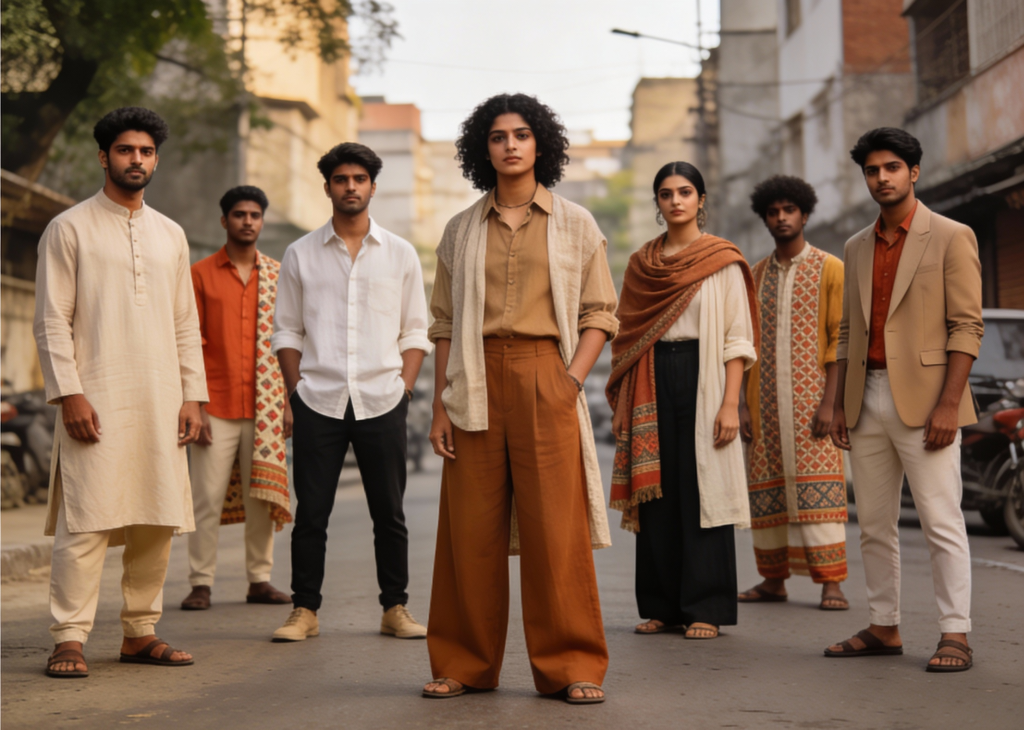
The traditional Indian wardrobe has long been defined by a strict binary. For decades, the retail landscape for men was a sea of structured shirts, rigid trousers, and the occasional sherwani, all adhering to a very specific definition of masculinity. However, a silent revolution is brewing in the ateliers of Mumbai and the street-style hubs of Delhi. Gender-neutral fashion is no longer just a buzzword whispered in high-fashion circles; it is fundamentally rewriting the DNA of what it means to dress as a man in modern India.
As we move further into 2026, the rigid walls surrounding the Indian man’s closet are crumbling alongside the concurrent changes within the women’s clothing segment. This shift is not about men simply wearing women’s clothes. Instead, it is about the emergence of a design philosophy that prioritises the individual over the label. From flowy silhouettes and soft pastels to the unapologetic use of jewellery, gender-neutral fashion is creating a space where self-expression is the only rule. This transformation is deeply rooted in our history, fueled by a digital-first generation, and backed by a rapidly growing market that recognises the power of inclusivity.
The Cultural Roots of Fluidity in Indian Clothing
To understand why gender-neutral fashion is gaining such massive traction today, we must first look backwards. Long before the term “unisex” was coined in the West, Indian attire was inherently fluid. If you look at the history of the Indian subcontinent, the concept of gender-segregated clothing is a relatively modern, often colonial, imposition. Our ancestors moved with a grace that transcended the binary.
The dhoti, for instance, is perhaps the most iconic example of gender-neutral fashion in Indian history. Historically worn by both men and women in various styles, it represented a functional, breathable, and elegant garment that ignored gendered constraints. Similarly, the angarkha and the jama were tunics that featured flares and ties, worn by Mughal emperors and Rajput warriors alike. These garments did not shy away from embroidery, floral motifs, or voluminous fabrics—elements that modern society eventually pigeonhole as feminine.
Even the saree, often viewed as the pinnacle of feminine grace today, has historical variations where it was draped in ways that resembled masculine trousers. By revisiting these roots, modern Indian designers are reminding us that gender-neutral fashion isn’t a “Western trend” being forced upon us. Rather, it is a return to an authentic version of our own cultural identity. We are simply reclaiming a fluidity that was always ours through unisex fashion trends.
The Modern Shift: Breaking the Rigid Binary
In the post-liberalisation era, Indian menswear became increasingly standardised. The “corporate man” look took over, and anything that deviated from the standard suit was viewed with scepticism. But the tide is turning. Today’s Indian man is increasingly comfortable stepping outside these narrow confines to explore genderless menswear India has to offer.
The shift toward gender-neutral fashion is visible in the way silhouettes are changing. We are seeing a move away from “slim-fit” items that emphasise a traditional masculine physique toward oversized, boxy, and draped fits. This change allows for a more democratic approach to clothing where the garment fits the person, regardless of their body type. Designers like Kallol Datta and brands like Huemn have been pioneers, creating pieces that refuse to be categorised.
This movement is also reflected in colour palettes. The days when “pink is for girls” was a hard rule are long gone. Lavender, mint green, and coral are now staples in the wardrobes of fashion-forward Indian men. This adoption of gender-neutral fashion principles signifies a broader psychological shift. Men are realising that their masculinity is not so fragile that it can be threatened by a floral print or a pleated skirt.
The Gen Z Influence and the Digital Renaissance
If millennials started the conversation around inclusivity, Gen Z has turned it into a loud movement. This generation, born into a digital world, has been exposed to global perspectives on identity from a young age. For an 18-year-old in Bengaluru or Chandigarh, gender-neutral fashion is not a radical political statement; it is simply a logical way to live.
Social media platforms like Instagram and Pinterest have played a massive role in this evolution. Influencers and digital creators are leading the charge, showing their followers how to style gender-neutral fashion in everyday life. Whether it is a man pairing a traditional silk saree with a leather jacket or a student wearing a pearl necklace with a graphic tee, these visual cues are normalising experimentation through gender-inclusive clothing.
According to a 2023 report by the Indian Chamber of Commerce, the youth fashion segment is one of the fastest-growing areas in the domestic market, with Gen Z contributing significantly to the demand for “gender-fluid” labels. This generation views clothing as a tool for storytelling. When they choose gender-neutral fashion, they are communicating their values of equality, freedom, and authenticity to the world.
Market Dynamics: Why Inclusivity is Good Business
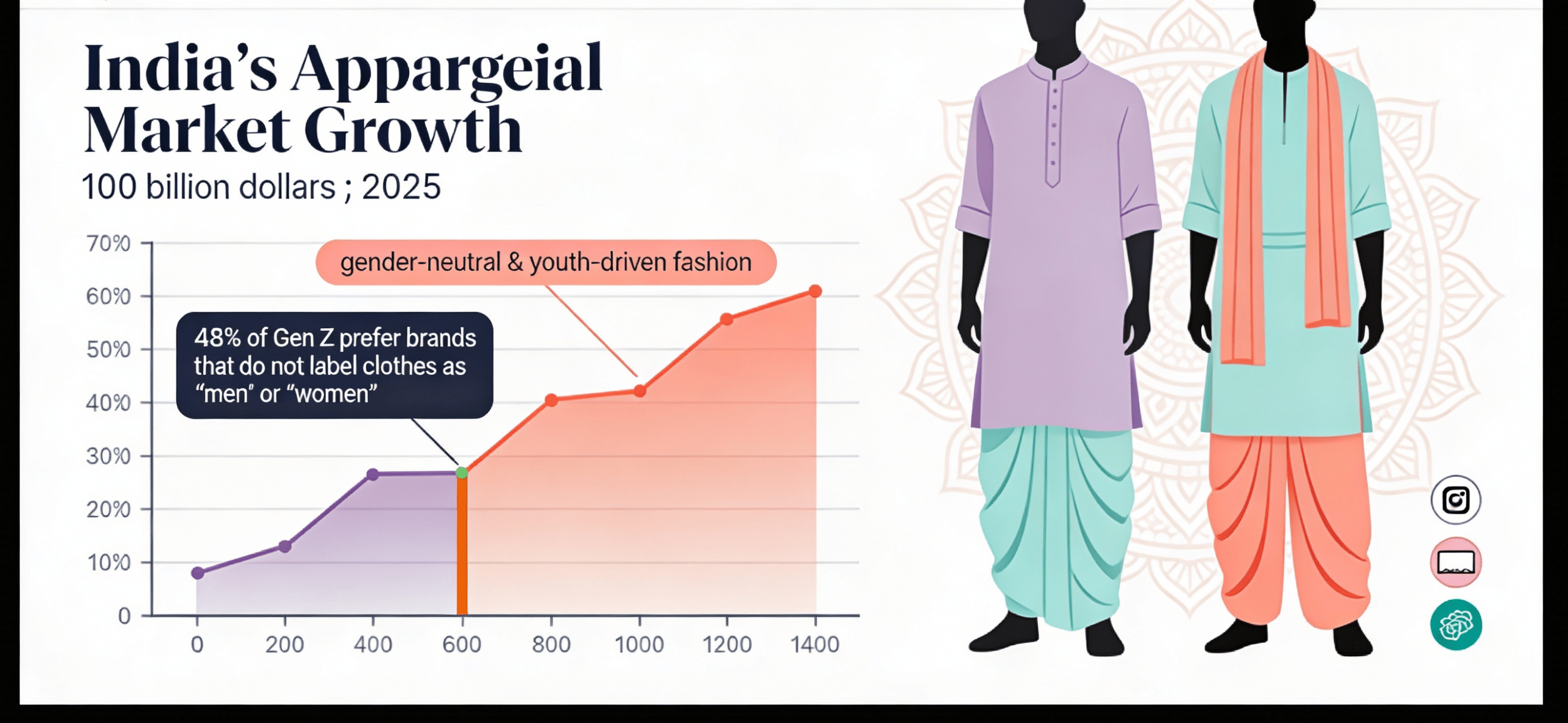
The rise of gender-neutral fashion is not just a cultural phenomenon; it is an economic one. Global market research suggests that the inclusive fashion industry is poised for exponential growth. In India, the apparel market is expected to reach nearly $100 billion by 2025, according to a report by Boston Consulting Group (BCG) and the Retailers Association of India (RAI). Within this massive pie, genderless menswear in India is carving out a significant niche.
Retailers are noticing that younger consumers are actively seeking brands that align with their social values. A study by McKinsey & Company highlighted that nearly 48% of Gen Z consumers prefer brands that do not classify items as purely masculine or feminine. In the Indian context, this has led to a surge in homegrown D2C (Direct-to-Consumer) brands that focus exclusively on gender-neutral fashion.
By removing the “Men” and “Women” sections from their websites, these brands are streamlining the shopping experience. This approach acknowledges that an oversized hoodie or a minimalist trench coat doesn’t have a gender. As gender-neutral fashion becomes more mainstream, we are seeing larger retail chains also begin to integrate “unisex” corners, signalling a permanent change in how the industry operates.
Identity and Self-Expression Through Fluid Style
At its core, gender-neutral fashion is about the reclamation of the self. For too long, the fashion industry told men what they could and couldn’t wear based on an arbitrary set of rules. For many Indian men, these rules felt restrictive. The movement toward gender-neutral fashion provides an escape hatch from those expectations.
When a man chooses a sheer shirt or an embroidered jacket that might traditionally be found in the women’s section, he is making a choice about who he is. He is saying that his identity is more complex than a label on a clothing rack. This sense of agency is incredibly powerful. Gender-neutral fashion empowers individuals to build a wardrobe that reflects their personality, their moods, and their unique aesthetic sensibilities.
Furthermore, this movement is intrinsically linked to the LGBTQ+ movement in India. Following the landmark decriminalisation of Section 377, there has been a visible increase in queer visibility in mainstream media. Gender-neutral fashion acts as a bridge, allowing for a more inclusive dialogue where everyone, regardless of their orientation or identity, feels seen and represented.
The Role of Homegrown Labels in Inclusive Fashion for Men
India is currently witnessing a renaissance of independent labels that are prioritising inclusive fashion for men. Brands like Bloni, Antar-Agni, and NorBlack NorWhite are not just selling clothes; they are selling a philosophy of freedom. These labels often use indigenous fabrics like Khadi and handloom silk, but cut them into contemporary, non-binary shapes.
This blend of traditional craftsmanship and gender-neutral fashion is particularly appealing to the modern Indian man who wants to stay connected to his roots while embracing global sensibilities. For instance, Antar-Agni’s draped kurtas and layered jackets offer a silhouette that is neither strictly masculine nor feminine, but universally flattering. This approach to inclusive fashion for men is making high fashion more accessible to those who previously felt alienated by traditional menswear.
Moreover, the focus on sustainability within these gender-neutral fashion brands adds another layer of appeal. Many unisex labels adopt “slow fashion” principles, producing high-quality garments that are meant to last. This resonates with the environmentally conscious Gen Z and millennial audience who are looking for gender-inclusive clothing that doesn’t come at the cost of the planet.
Why This Transformation Matters for the Future
As we look toward the future, it is clear that gender-neutral fashion is not a passing fad. It is a fundamental shift in the architecture of the fashion industry. The future of Indian menswear is not about the disappearance of masculinity, but rather the expansion of it. We are entering an era where “masculine” can include being soft, decorative, and fluid.
We can expect to see more collaborations between traditional craftsmen and modern designers to create gender-neutral fashion that celebrates Indian heritage while embracing modern values. Imagine a future where a groom feels just as comfortable in a beautifully draped, embellished cape as he does in a traditional sherwani. The possibilities are endless because the boundaries have been removed.
The impact of unisex fashion trends will continue to trickle down from the runways to high-street retail. As more mainstream brands adopt gender-neutral fashion principles, the cost of inclusive clothing will likely decrease, making it accessible to a wider demographic beyond metropolitan cities. This democratisation is essential for the movement to have a lasting cultural impact.
Ultimately, the success of gender-neutral fashion in India will be measured by how invisible it becomes. When a man can walk down a street in a skirt or a lace blouse without it being a “brave” statement, we will know we have arrived. This transformation matters because it fosters a society that is more accepting, less judgmental, and infinitely more creative.
In conclusion, gender-neutral fashion is redefining Indian menswear by looking both backwards at our inclusive history and forward toward a more liberated future. It is a movement led by the youth, backed by economic shifts, and sustained by the human desire for authentic self-expression. As the lines continue to blur, the Indian man is finally finding the freedom to dress not for the world’s expectations, but for himself. Whether through genderless menswear India or global unisex fashion trends, the revolution of gender-neutral fashion is here to stay.
[…] effects of this massive generational fashion shift continue to play out on social platforms, where visibility depends entirely on aligning with […]